
2026-08-31 · Matthew Taylor
Differences Between Pipe Leaks and Monsoon Flooding in Surprise Homes
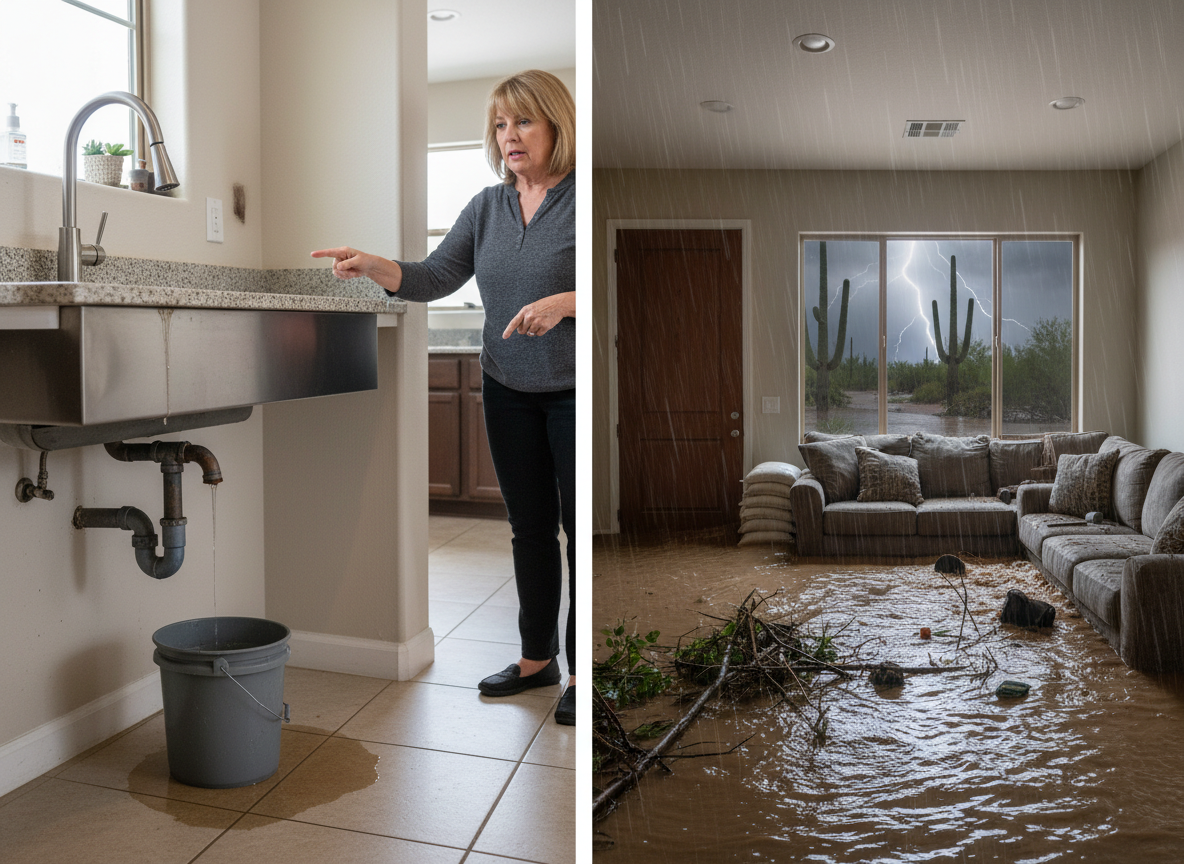
Pipe leaks in Surprise homes typically affect smaller areas with gradual water seepage from plumbing fixtures, whereas monsoon flooding introduces large volumes of contaminated water from outside within hours during summer storms.
Water Sources and Typical Volumes
Pipe leaks often stem from aging supply lines or water heater connections in homes built across Sun City Grand and Surprise Farms. These releases stay contained to one or two rooms and rarely exceed a few gallons per hour. Monsoon rains, driven by the hot desert climate, can drop several inches in a single afternoon, overwhelming drainage around Asante and Bell West Ranch properties. External runoff from White Tank Mountain Regional Park slopes adds silt and debris that pipe failures never introduce. Homeowners near Surprise Stadium notice street flooding that backs up into garages and yards far faster than any indoor leak.
Structural Effects in Local Housing
Slow pipe leaks in Maricopa County homes frequently travel along slab foundations common in Surprise neighborhoods, softening subfloors over weeks without visible puddles. This pattern appears often in El Mirage and Sun City properties where mild winters allow undetected seepage until mold forms. Monsoon flooding saturates drywall from the bottom up and forces water under baseboards across entire first floors. The rapid pressure difference during heavy downpours can also push water through window seals in Peoria-adjacent homes, creating damage patterns that require full-room demolition rather than targeted repairs.
Contamination and Health Considerations
Water from burst pipes inside the home stays relatively clean unless it mixes with sewage lines, limiting immediate biohazards. Monsoon water carries street oils, fertilizers from Surprise Community Park lawns, and animal waste, raising contamination levels that demand antimicrobial treatment. Residents in Legacy Parc and Rancho Gabriela report higher bacterial counts after floods because water travels across roads before entering homes. Professional assessment distinguishes these sources quickly because treatment protocols differ sharply between the two scenarios.
Drying Timeframes and Equipment Needs
Localized pipe leaks allow targeted drying with air movers and dehumidifiers focused on one wall or floor section, often completing in three to five days. Monsoon saturation across multiple rooms in Sierra Montana or Mountain Vista Ranch homes requires larger equipment arrays and longer run times of seven to ten days to reach safe moisture readings. The region's low humidity helps final drying stages but does little to offset initial high water loads from flash events. Burst pipe and plumbing leak cleanup follows different extraction steps than flood damage cleanup because external water always needs debris removal first.
When to Choose Professional Intervention
Homeowners should track whether water originates from an indoor fixture or outside weather to select the correct response. Persistent damp spots near plumbing or sudden spikes after rain point to different root causes. For guidance on post-flood drying sequences, see the step-by-step guide to drying out after a Surprise flash flood. Accurate source identification prevents unnecessary demolition while ensuring hidden moisture behind cabinets or under tile receives proper attention before secondary issues develop.