
2026-08-31 · Matthew Taylor
Protecting Stucco Exteriors From Monsoon Water Intrusion
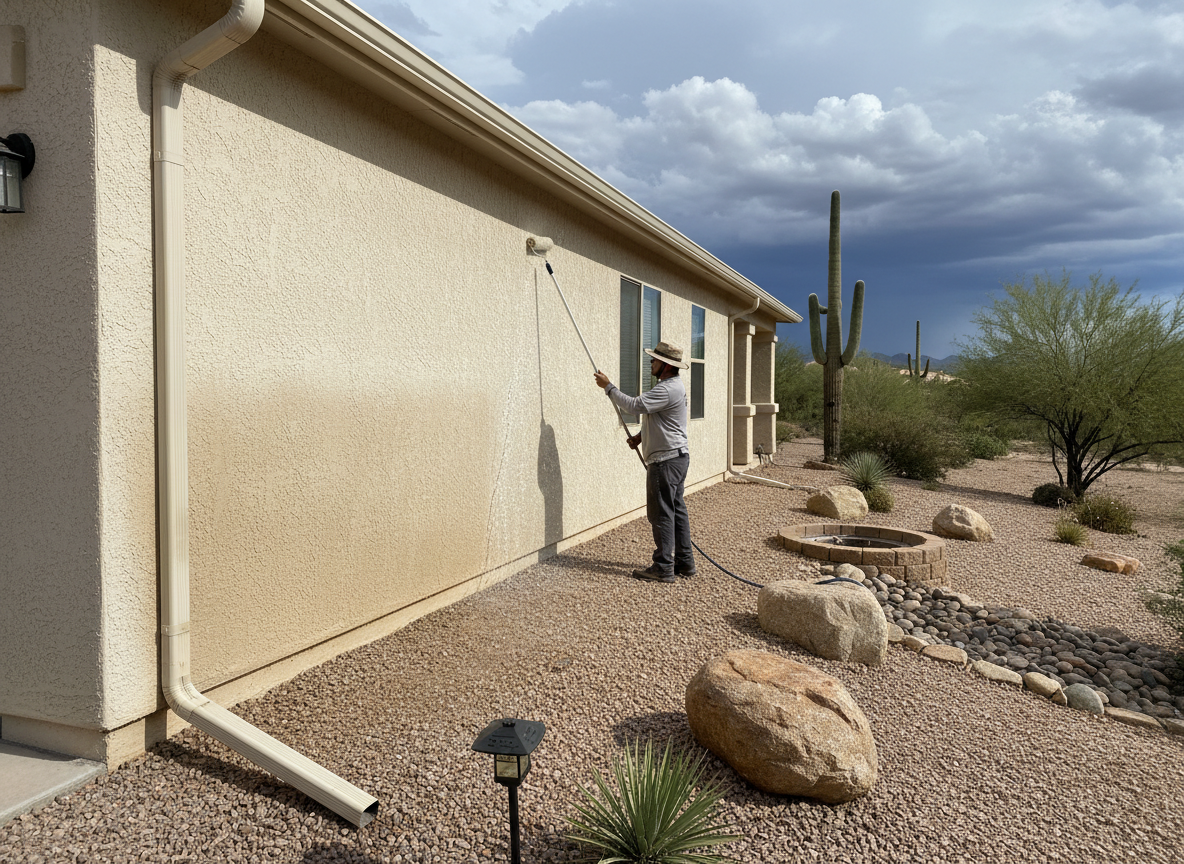
Stucco exteriors in Surprise hold up under daily heat but need specific attention when monsoon rains hit Maricopa County neighborhoods. Start by checking horizontal ledges, window returns, and base transitions on homes in Sun City Grand, Asante, and Surprise Farms for hairline cracks or softened material that lets water travel inward.
Monsoon Patterns and Stucco Performance in Surprise
Monsoon storms drop heavy rain in short bursts across Surprise and nearby cities such as El Mirage, Sun City, and Peoria. These downpours test stucco more than the usual hot desert summers or mild winters because water sits against walls when wind drives it sideways. Homes built with traditional three-coat stucco often show wear first at control joints and where stucco meets dissimilar materials like stone or wood trim. In neighborhoods such as Bell West Ranch, older stock tends to have wider expansion gaps that collect debris and hold moisture longer after each event. Checking these spots right after the first major storm of the season reveals whether water is already moving past the surface layer.
Checking Joints, Flashings, and Base Details
Walk the perimeter at ground level and look for gaps where stucco meets the foundation or where weep screeds have collected dirt. In Surprise Farms many lots slope toward the house because of the flat terrain, so water pools against the lower stucco course during storms. Use a moisture meter on interior walls opposite exterior stucco planes to confirm whether rain has already crossed the barrier. Pay special attention to roof-to-wall transitions on single-story homes common in Asante; missing or deteriorated counter-flashing allows water to run behind the stucco and travel downward. Document any soft spots with photos so you can track whether conditions worsen after the next monsoon cell passes through.
Improving Drainage and Grading Around Stucco Walls
Re-grade soil so it falls away from the foundation at least six inches in the first ten feet to keep monsoon runoff from sitting against stucco. Clear debris from French drains or channel drains installed along driveways in Sun City Grand before the season starts. Extend downspouts at least five feet from the wall and add splash blocks where soil erodes during heavy rain. These steps reduce the volume of water that reaches the stucco base and lower the chance of repeated saturation that leads to interior damage. When grading changes are not enough, homeowners often combine them with targeted exterior sealing performed after the wall has dried completely.
When Water Intrusion Requires Professional Drying
If moisture readings stay elevated after surface water recedes, contact a team familiar with Storm Water Damage Restoration to extract trapped water and run drying equipment before mold forms. The same approach applies when roof edge leaks allow water to travel behind stucco; see the related guide on Differences Between Pipe Leaks and Monsoon Flooding in Surprise Homes for comparison. Prompt structural drying prevents the need for larger repairs later in the season.
Ongoing Maintenance That Protects Stucco Long Term
Reapply exterior-grade elastomeric coating to previously sealed areas every few monsoon cycles once the wall tests dry. Keep vegetation trimmed back at least eighteen inches from stucco surfaces so splash-back during storms does not repeatedly wet the same spots. Schedule a full perimeter review each spring before monsoon activity begins so any new cracks from winter temperature swings can be addressed early. These habits, combined with quick response when water does enter, keep stucco exteriors performing in Surprise homes without repeated interior restoration work.